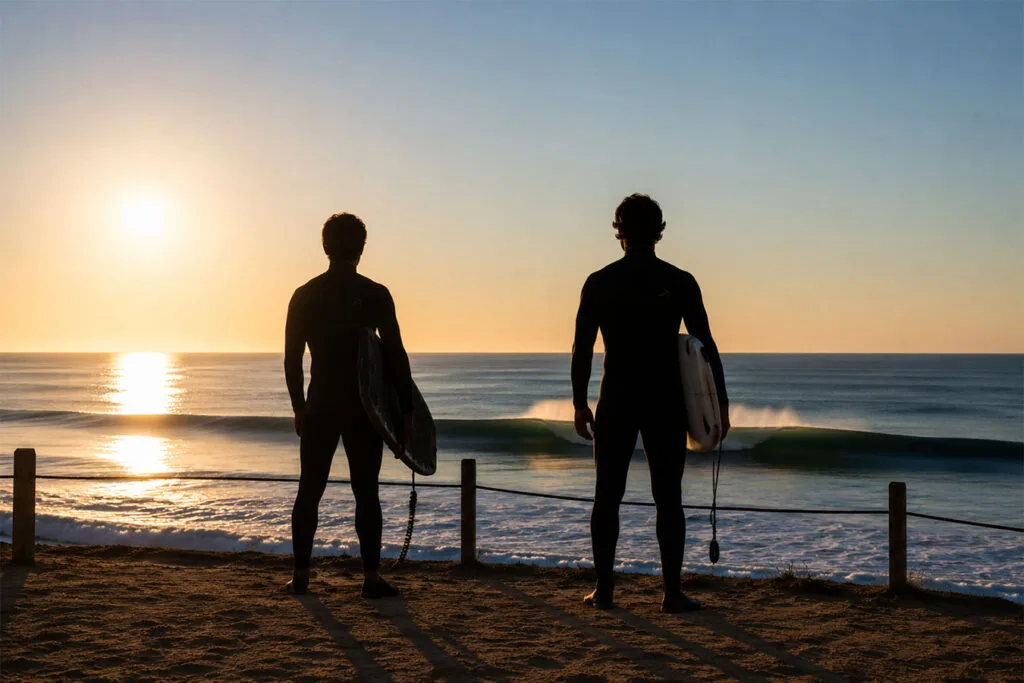
I’ve been bodyboarding since I was a child. I love the feeling of being immersed in the sea, in the water, in nature. The sound of the water. The silence. The cry of the seagulls. Being tumbled by the force of the ocean. Whether the waves are small or large, the pleasure is almost the same; what changes is the amount of adrenaline and fear involved. The fitter I am, the more willing I am to take risks. And because I’ve had my fair share of frightening moments, I always judge the conditions according to the day and my physical and mental state. The fitter I am, the bigger the swell I chase; the less fit I am, the more cautious I become. I go through phases. I’m a creature of obsessions. Once I start, I become completely hooked. I always want more. There were times when I’d drive from Faro to Sagres twice a week just to catch some waves. That’s around 250 to 300 kilometres every trip. And it’s always worth it. It’s rejuvenating. It brings everything back to life. My body, my blood, my skin, my eyes. My lungs. My tongue. It’s life itself. I’m incredibly fortunate to have my sacred place so close to home. Sagres means exactly that. It comes from Sacrus. My sacred promontory. When I stop, I can go months without surfing. But the truth is that I always end up coming back. And it’s been like this for decades. My passion for the waves began with my brother when we were children. We started out playing with polystyrene boards, then rubber ones, and it wasn’t until my teenage years that I bought my first proper board. Since then, I’ve owned dozens. Back then, and I still don’t know why, there always seemed to be waves in Faro. We’d catch the 6:20 a.m. bus from Penha to Faro Beach and be the first ones there. We’d spend the whole day on the beach. Those days felt endless. Like us, there were so many other young people from Faro, groups of friends, little tribes. Real gangs of peace. Over the years I changed boards, wetsuits and fins. I’ve surfed waves on almost every beach in the Algarve and along the Vicentine Coast; on beaches throughout central and northern Portugal; in Fuerteventura, Bali, Senegal, Mozambique, South Africa and, most recently – and most memorably – the Telos Islands, in the Mentawai archipelago of Indonesia. There are still many places I dream of surfing. In good time. But this sport has given me an extraordinary sense of peace throughout my life. When I was younger, I battled with myself to master manoeuvres and make the most of every ride. Today, none of that matters. I simply want to enjoy myself and lose myself in the sea. If I pull off a few manoeuvres, brilliant. If I don’t, that’s brilliant too. But every time I manage to ride a proper barrel, I feel as though I’ve gained a few extra years of life. That’s the pursuit. That’s Love.
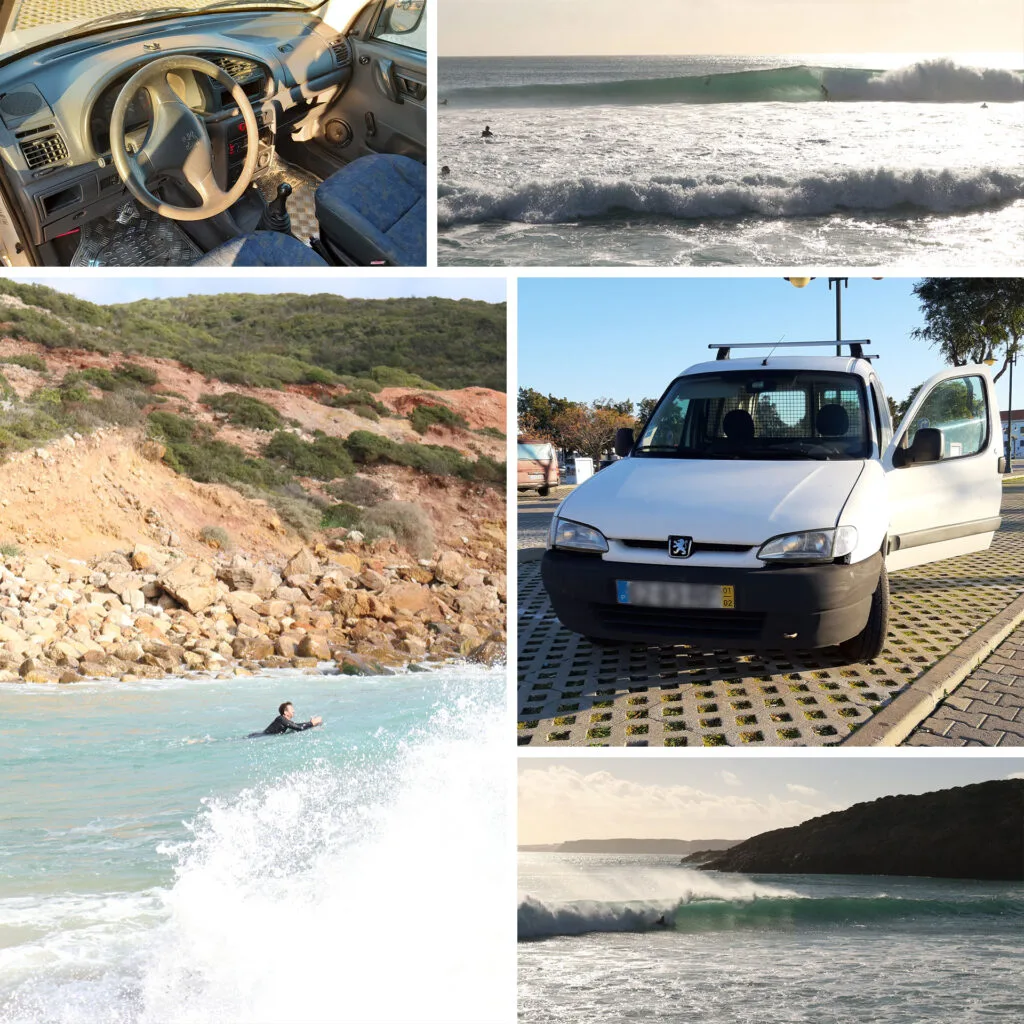
Back then, whenever work allowed, it was common for us to set aside a day to head to Sagres. We’d bodyboard, talk, walk around, and simply spend time together. We spoke endlessly about the company, about ourselves, about what we wanted to achieve and how far away we still were from getting there. Most of the time we’d take my old Peugeot Partner van. Other times we’d go in João’s Volvo, and later, in the “rocket ship” – the Dacia Logan MCV that B16 had just bought. It was also the year I sold the Partner. Emotionally, that wasn’t easy. I loved the independence and freedom it gave me – the possibility of sleeping wherever I wanted. And the stories that little van could tell… I wouldn’t even know where to begin. Most of the time it was just the two of us. But sometimes Vânia came along, or Relógio, or Pedro “Fera”. It became something of a tradition within the company. Whenever work gives us a little breathing room, either the day before or even first thing in the morning, I’ll send a message that simply says: “Fancy Sagres?” And the excitement immediately takes over.
At the beginning of 2019, things were going remarkably well. We were growing at a healthy pace, winning new clients and, above all, earning the trust of those who were already with us. We were working with incredible people. João, Vânia, Ricardo Flôxo, Nuno Relógio, Tiago Cruz, Pedro Dias… each one with their own personality, talent and way of looking at the world, but all sharing the same commitment: to give their very best in everything we did.
It was also at the beginning of 2019 that we produced the “water” video. Or rather, the barber’s video. It was one of those projects where everything seemed to fall naturally into place. An idea that became another idea. A location leading to another location. Between wardrobe changes, trimming here, adjusting there, the final result was this:
At the time, we published our work organically, without major strategies or paid campaigns. We simply wanted people to see what we were capable of creating. To this day, I still believe that authenticity has always been one of the principles that has guided our journey. Some investments are made simply because they make sense, even when there is no immediate financial return.
I’ve undertaken business consultancy with a number of suppliers over the years. The one that stands out the most – and the one I enjoy learning from the most – is Paulo de Vilhena’s Academy in Lisbon. I’ve completed several training programmes with them. I’ve also engaged their consultancy services and worked closely with the consultant Ricardo Brás, a remarkable person from whom I’ve learnt an enormous amount. The truth is that no entrepreneur is born knowing everything. Some people possess natural gifts, an instinct, an inner drive that takes shape differently from one individual to another. I had never been an entrepreneur before, and my mindset has always placed different goals ahead of projects than simply money or financial performance. Every millionaire I read about, watch or learn from seems to live by the same principle: never lose money. Warren Buffett even includes it among his fundamental rules of financial management. According to him, there are two infallible rules every entrepreneur should follow whenever making a decision: the first is “Never lose money”, and the second is “Never forget Rule No. 1.” It’s amusing, but equally brilliant. That is where their focus lies. The millionaires’, that is. Mine has never been there, and, by choice, it never will be. I know myself well enough. That has never been my ambition. I’ve always been more interested in being than having. My focus has always been elsewhere. Nevertheless, at the Academy we learnt how to reshape our perspective. How to adjust our focus according to the demands of everyday business. How to fine-tune the levers that help us make better decisions. How to read the numbers. How to prepare the road ahead by interpreting results accurately. How to define a strategy from A to Z. How to anticipate what lies ahead. How to identify what we are failing to see. I’ve learnt a great deal there, and I continue learning every single day. The greatest challenge is managing time between family, work, personal growth and leisure. Finding the space to truly absorb what I’ve learnt and put it into practice. It’s the combination of everything. And it’s important not to lose focus. In the middle of an inspiring and intellectually stimulating learning process, another fire suddenly needs putting out, a scheduled project demands attention, or a deliverable simply cannot be neglected. Nor can I stop putting my family first. Watching my children grow up is priceless. That’s simply who I am. Even so, I’ve improved enormously throughout the process. The goal is to keep improving.
At the beginning of that year we accomplished a great deal. One of those milestones was the launch of our own website, as I mentioned in the previous chapter. This time, we created a proper campaign. We spent more than ten days producing, experimenting, testing, filming, recording and gathering material. Then came months of editing, selecting, adapting, refining, assembling and bringing everything together. I love every video we produced. The main Samurai film, the behind-the-scenes documentary, the standalone pieces of content that we can still use today, the stop-motion videos, the time-lapses, the photographs… everything. We created something to be proud of. And the website exceeded our expectations. Far exceeded them. We devoted ourselves completely to it: to the design, the writing, the selection of the work, the structure and presentation of the content. We held meetings with Marcelo almost every day. I wrote; João revised. João selected content; Marcelo refined the choices. Marcelo proposed solutions, and the two of us built upon them, constantly contributing ideas and adding value. It was a project shaped by three pairs of hands. We truly connected throughout that process. For the first time in B16’s short history, we had a small online portfolio, a place that showed the world what we had achieved with each client. The challenge. The research. The concept. The methodology. And the solution. We began working together through online conversations, but everything coincided with Marcelo’s trip to Portugal. It felt as though it had all been written that way. It was an unforgettable moment.
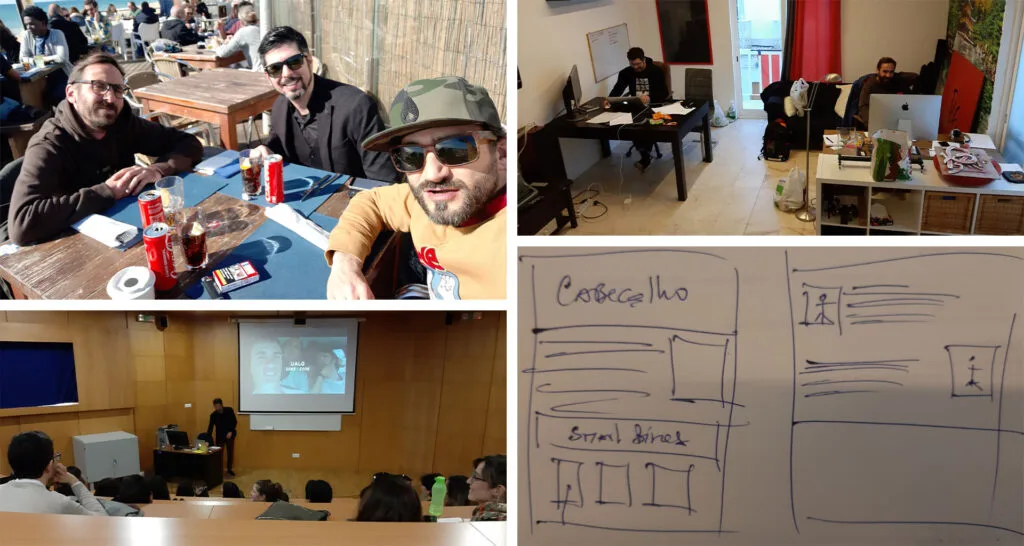
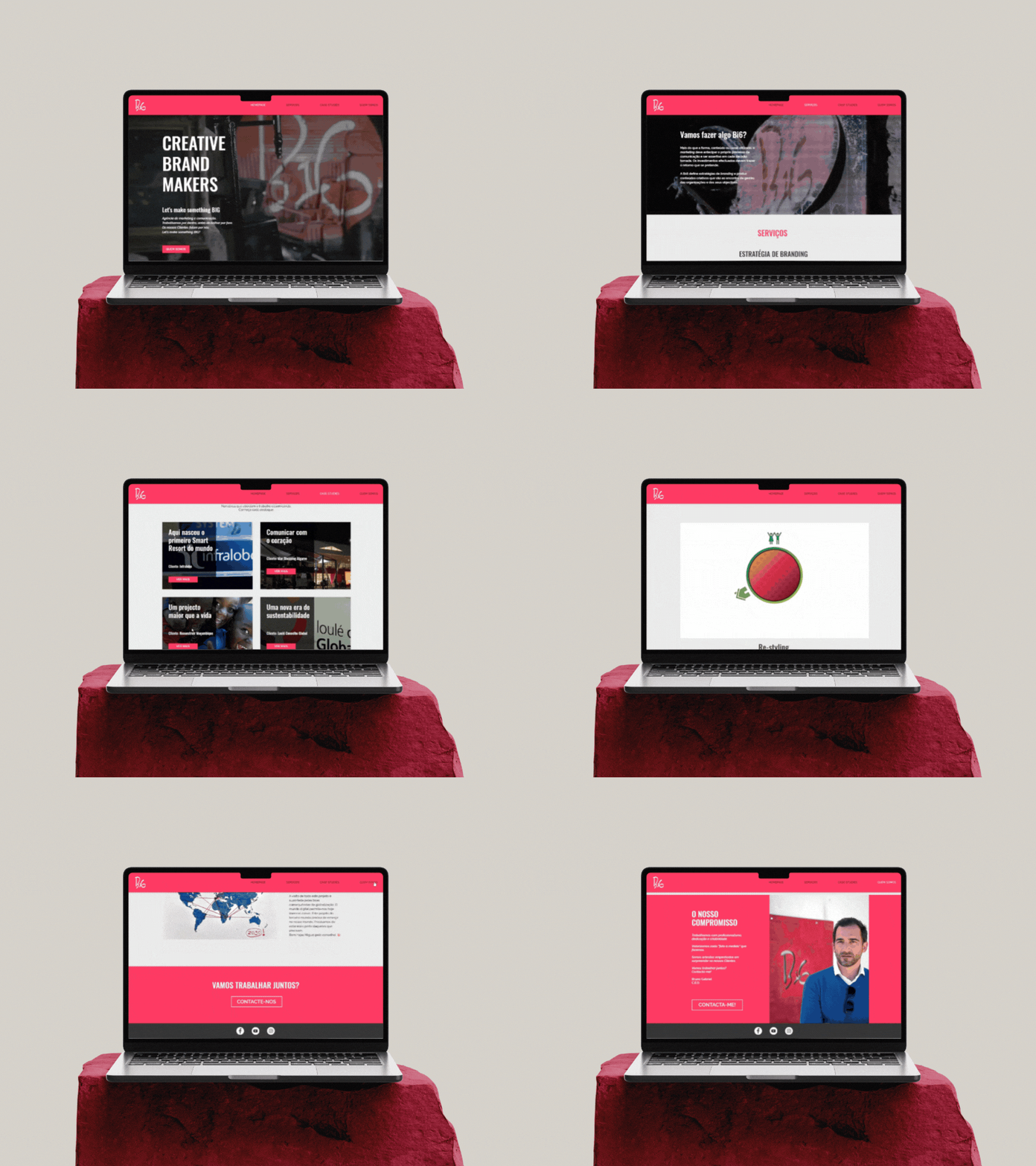
On the day we launched the website, I remember we went surfing in Sagres. It was a kind of gift we gave ourselves. We were sorry Marcelo couldn’t come with us. He had already returned to Japan. Even so, we shared our celebration with him. I can’t remember whether we caught any waves or not. Going there never guaranteed there would be any. A lot has changed since then. Nowadays there’s an app with webcams installed on beaches, along with local weather forecasts, allowing us to analyse the conditions and choose, with far greater accuracy, the best place to surf on any given day. Back then, though, none of that existed. We relied on general weather forecasts. What I do remember is that we went there to celebrate, and it felt good. Just as it always did whenever we escaped to the sea. It did us good. And we loved it. We still do.
I find it incredibly difficult to remember exactly which projects we worked on, when we did them, who they were for and why. 2019 was yet another year of production. We created dozens of promotional videos, event films and reportage pieces. We delivered rebrandings, consultancy projects and restylings. We developed projects from the ground up, handled recurring assignments, expanded ongoing work and responded to countless new requests. We worked regularly with MAR Shopping Algarve, Grupo Timing, Sisgarbe, Loulé Concelho Global and Designer Outlet Algarve. We delivered projects for all of them at a relentless pace. And because there were only three of us, our methodology varied according to the time available and the company’s immediate invoicing needs. If there was an urgent need to get an invoice out, we would push to complete one project or another. If we managed to create our own production pipeline, then we worked entirely in our own way, without any project management software or similar tools. We simply had a whiteboard on the wall where we noted down filming days and delivery deadlines. That was how we managed our priorities.
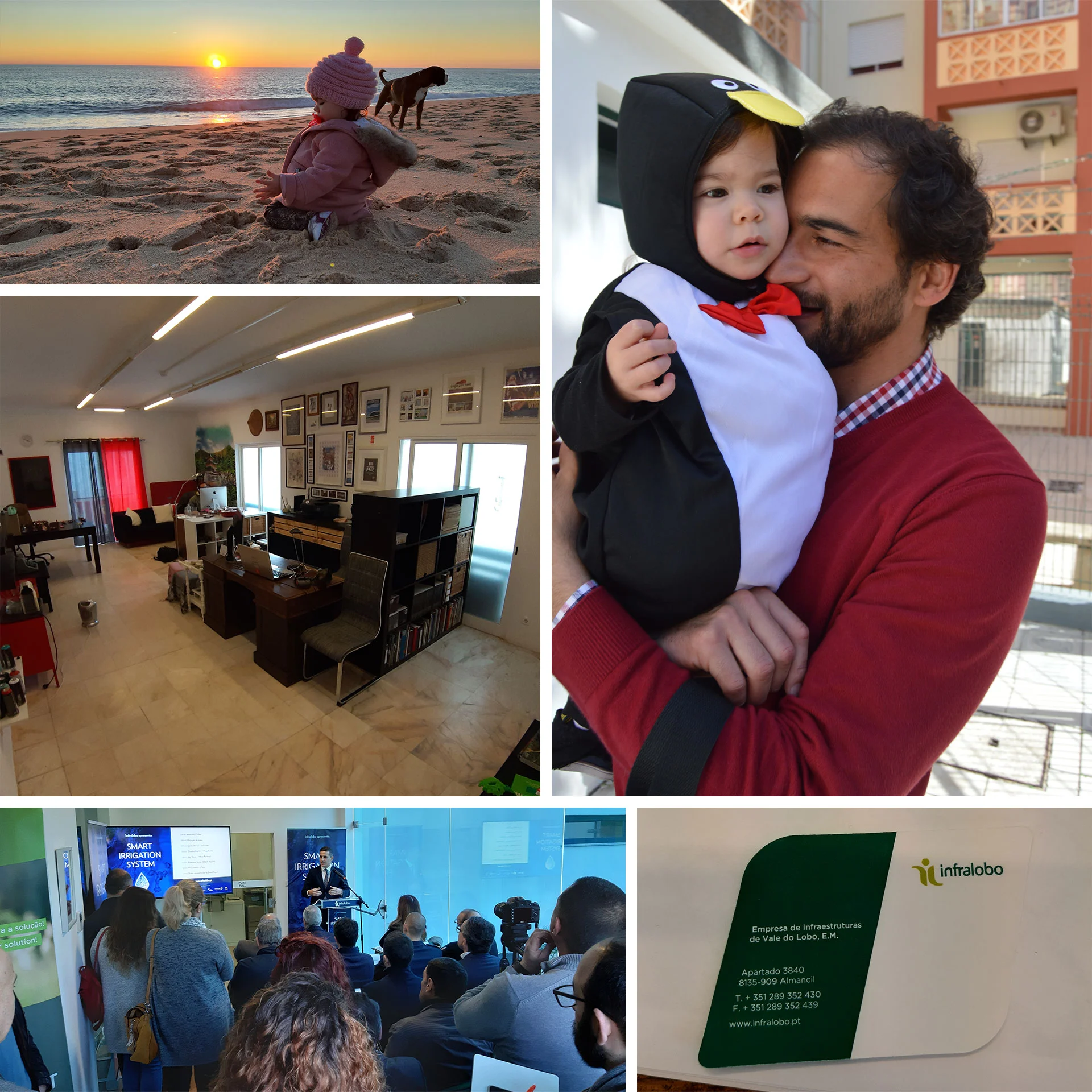
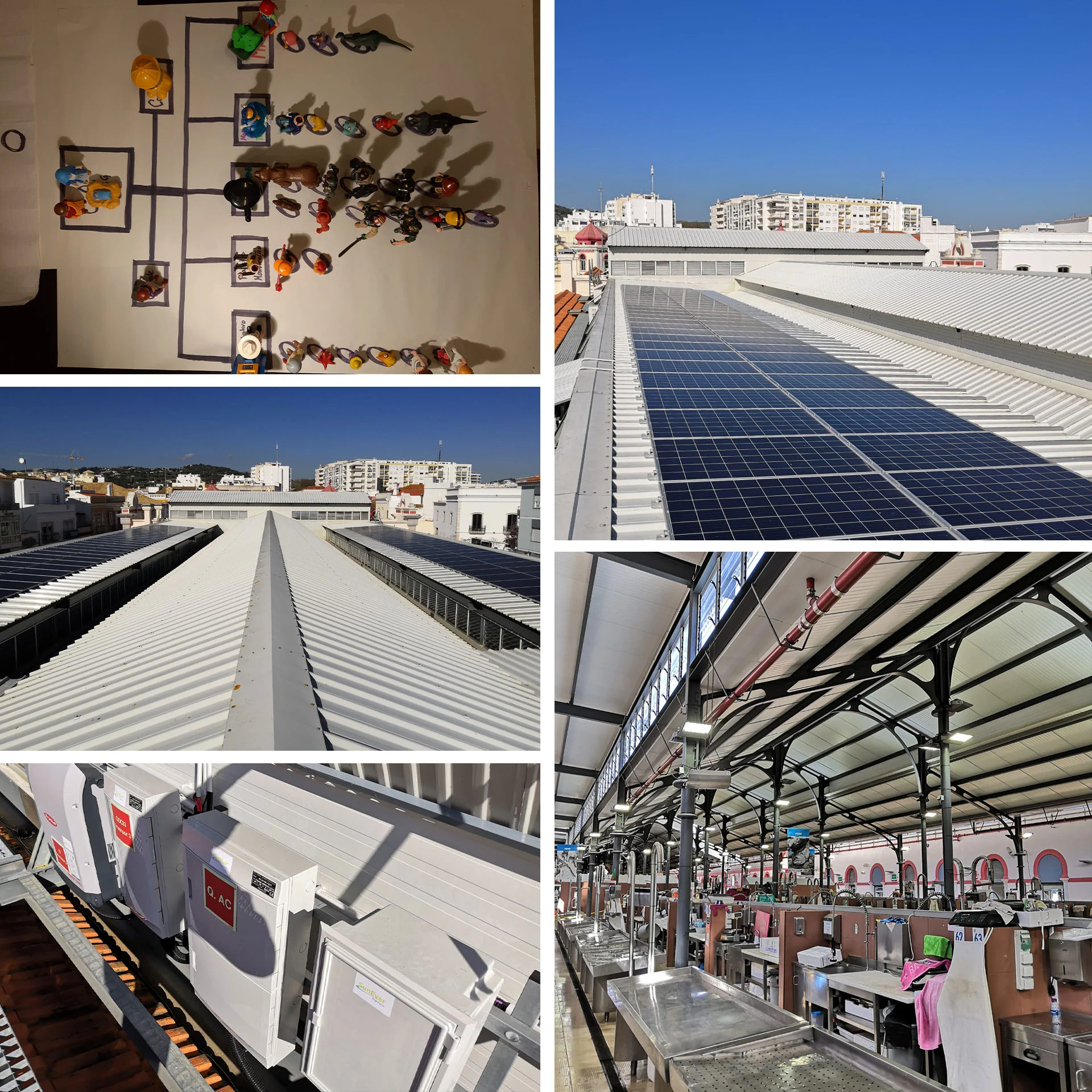
I oversaw everything. I knew what was happening everywhere, all the time. In most cases, I was involved in the pre-production, production and post-production of every project. But it wasn’t always possible. Whenever João and Vânia had to go out filming, I tried to be there with them. I tried to follow the editing process of every piece of work. I tried to manage the company, manage our clients and manage the entire consultancy side of the business, which depended entirely on me. I was the one who hired the freelance crew to support our video productions. I was the one who carried out the communication and marketing consultancy with our clients. I was the one who commissioned the designers (Marcelo, Tiago, André, Rui and others). I was the one who presented the results. I was the one who sold new ideas and secured new projects, always with the intention of growing the business and creating the conditions to offer proper employment to the people working alongside me. I was the only person employed by the company under a formal contract, with social security contributions, income tax, employers’ liability insurance, meal allowance, health and safety compliance, and every other legal obligation that comes with employing someone in Portugal. The plan, however, was to formalise João Costa’s employment first, and then move on to bringing Vânia in on a monthly retainer. The more work we had, the more projects we could take on. The more projects we embraced, the stronger the company’s foundations would become. That was the Vision. Until then, João Costa had been working as a self-employed contractor, issuing invoices for his services. That arrangement remained in place for a long time, with all the advantages and disadvantages that come with that kind of professional relationship. I can honestly say there were many months when I didn’t pay myself a salary so that I could meet every one of my obligations. I never failed to honour a single commitment. I’ve spoken about this in previous chapters. The collapse of my first business in 2008 left such a profound mark on me that I never wanted to return to that destructive state of mind of owing even a single euro to anyone. I’ve never been to prison, but I have no desire to return to that psychological prison. It’s terrifying. I’m never going back. Full stop. So, before taking on any permanent employee, I needed absolute certainty. Or, at least, that’s how I felt at the time. For that reason, it made more sense to place João at the very heart of the company and its day-to-day operations. I even remember us discussing the possibility of becoming business partners. The idea that he might one day become my partner and hold a stake in the company. We even spoke about it with a lawyer we knew. But always with the understanding that the company first needed to grow and strengthen its foundations before we could do everything properly.
Vânia filmed and edited dozens of video pieces for MAR Shopping Algarve. João would review her work, offering suggestions for improvement, proposing changes or giving his approval. They were months of intensive work, and Vânia gradually took responsibility for the simpler productions: events, sports sessions, children’s activities, new services, concerts and promotional shoots. She was becoming increasingly independent. However, in the midst of all this, she went through some personal difficulties that prevented her from dedicating herself to the work as much as she wanted to. She had other concerns on her mind. And, little by little, she became somewhat absent. Even so, João kept everything running and, above all, concentrated on the more demanding projects that MAR Shopping entrusted to us. It was during the first quarter of that year that we embarked on one of our most challenging assignments: producing a complete package of content for the Four Chefs project, created exclusively for the shopping centre. The concept was to get to know each chef personally, both in their private lives and in their professional environments, and to connect that story with the restaurant they represented: José Domingues with Portuguese Lab, Leonel Pereira with ThaiBrás, Guy D’Oré with Bistro, and Louis Anjos with My Pasta. The Algarve Chef Experience was a distinctive concept that demanded a carefully considered communication strategy. There was simply no way to compete with international fast-food chains unless we broke down and showcased what made these four restaurants genuinely different. They deserved their own voice. There was no comparison. Not in the ingredients. Not in the creativity. Not in the service. Some of them were Michelin-starred chefs. During this period, João Costa and I spent several days filming with each of them, producing long-form videos, shorter edits and teaser clips that would later form part of a paid media campaign designed to communicate the concept, the food and the experience. I remember filming Chef José Domingues on the bridge at Quinta do Lago, overlooking the Ria Formosa. I remember filming Chef Guy D’Oré while oyster harvesting on Faro Beach. I remember interviewing Chef Leonel Pereira at São Gabriel Restaurant in Vale do Lobo. And I remember interviewing Chef Louis Anjos at a spice farm near Tavira. Those were moments of genuine closeness, commitment and responsibility that we shared with every one of them. They welcomed us as though we were part of their family. They invited us to taste their dishes and specialities. They spent time with us. They trusted us. And expectations for the final result were incredibly high. Hours upon hours of raw footage and B-roll awaited us in the editing suite. It was another project that we had captured and placed into our post-production pipeline, waiting for its turn on the company’s whiteboard.
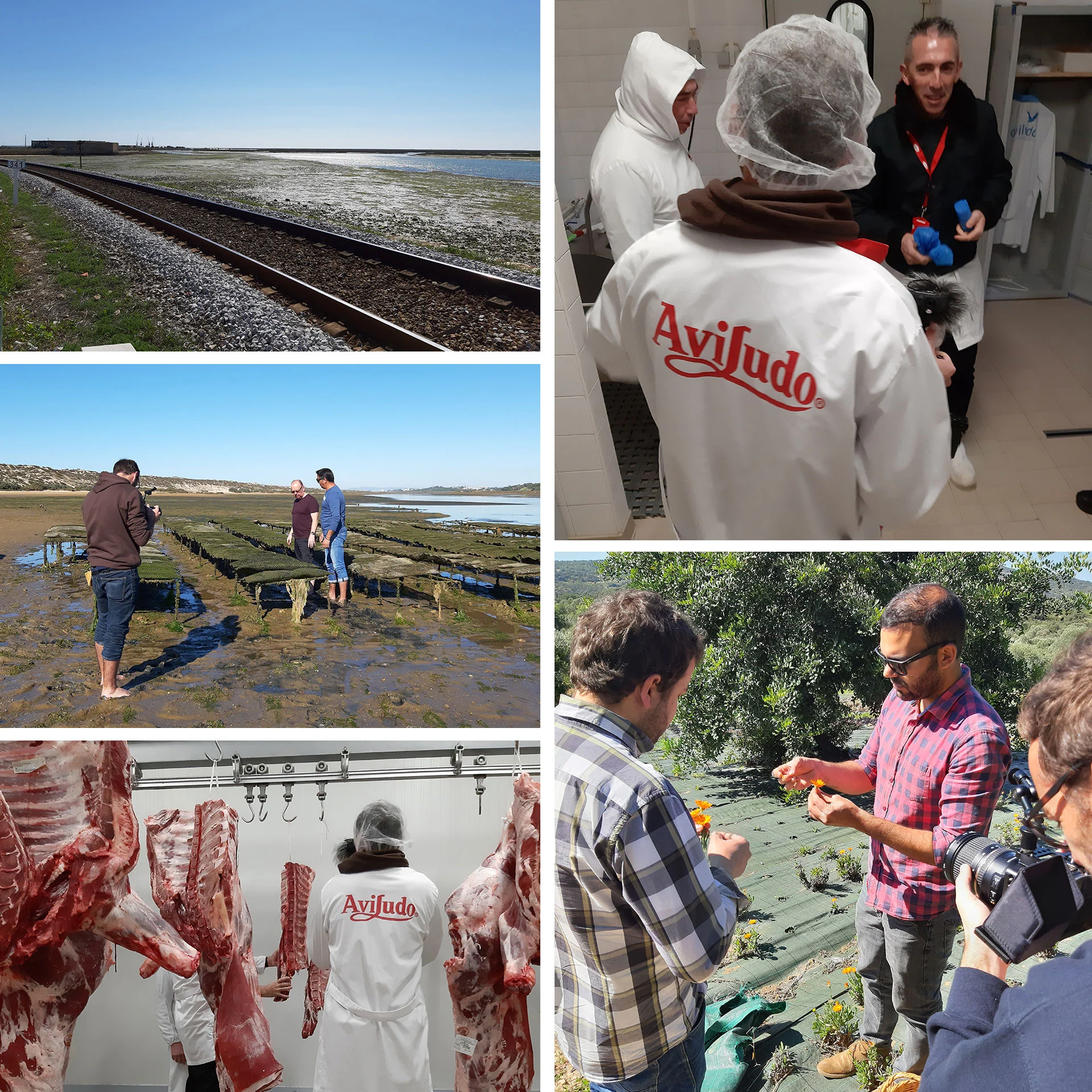
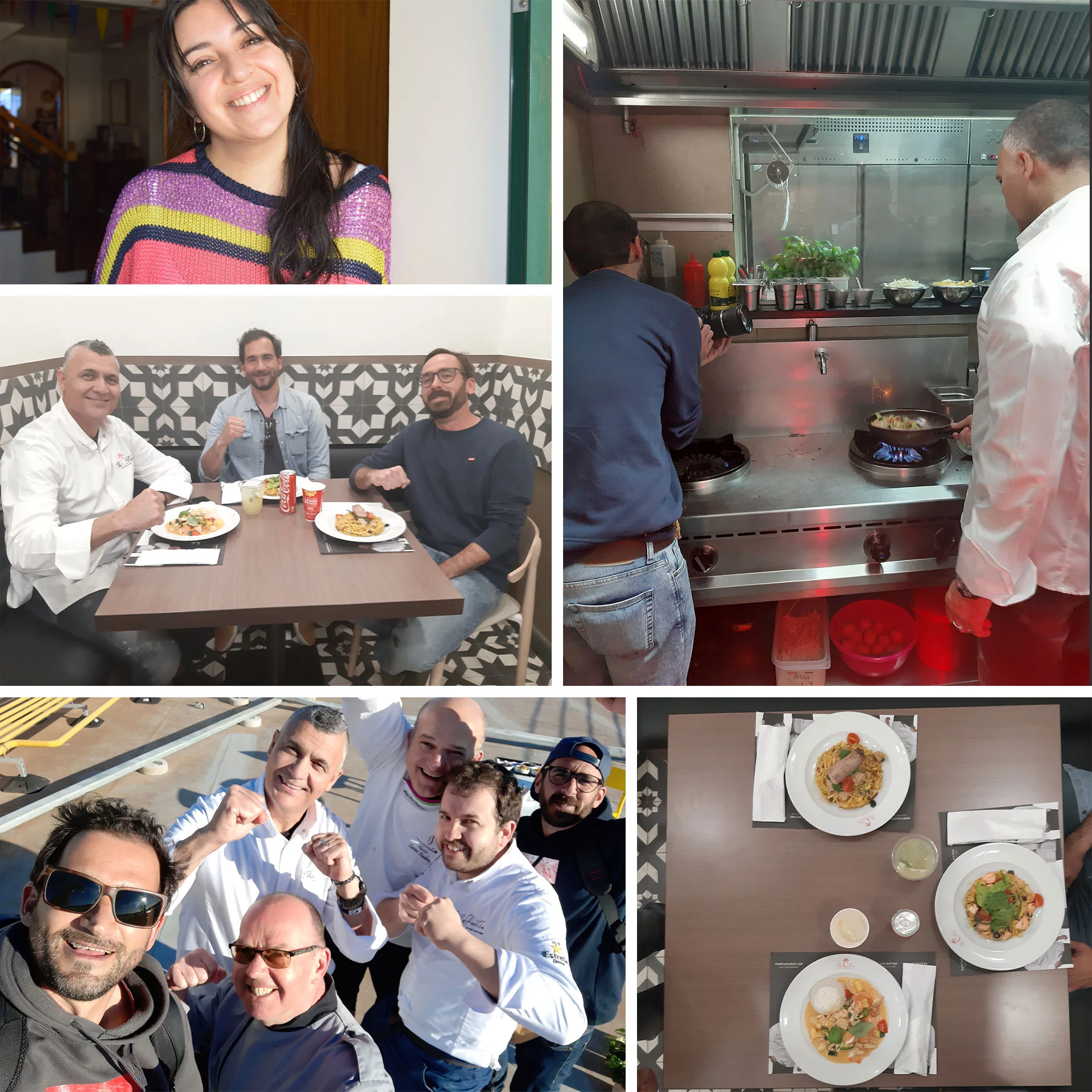
We also produced a huge amount of content for the Timing Group: short videos promoting success stories of workers who eventually secured permanent contracts with their employers; events and promotional videos for Help 21 gym; content for several restaurants; and bespoke material for the Group’s various businesses. Some projects were simple and concise, others far more elaborate. We spent countless hours capturing footage that would later be transformed in the editing suite.
But that wasn’t all we did. Much of our work was for Loulé Concelho Global, a great deal for Infralobo, and plenty for Designer Outlet Algarve. Some projects were delivered entirely by us, others were completed with the support of the freelancers I mentioned earlier, while many I ended up developing almost entirely on my own.
The truth is that, amidst such an overwhelming workload, the edits simply kept piling up.
I’ve said this before, and I’ll repeat it as many times as necessary: filming is only half the job. You have to know how to edit. Anyone behind the camera needs to visualise how those images will come together in the final cut. Simply recording footage without purpose achieves very little, unless the individual shots are already capable of communicating on their own. You need to understand rhythm, pacing, momentum, transitions, composition, atmosphere, and the emotional impact the finished piece is meant to create. João excelled at that. He could see the finished film before he had even started shooting. Vânia was beginning to understand the tone of voice of MAR Shopping Algarve, and that allowed her to edit the footage she captured accordingly. João approached things differently. Every project demanded its own preparation, his own perspective, his own internal lens. And whenever he delivered a final edit, it carried an unmistakable signature. A visual language that added genuine value. If an interviewee said something particularly meaningful, João would frame the shot in a way that reinforced those words. If something essential had been left unsaid, the soundtrack, the transitions or the pacing would communicate it instead. If the images alone deserved to stand out, he knew exactly how to elevate them through music, giving them greater weight, greater beauty, greater emotion. Capturing video is important, of course. Framing. Focus. Action. Camera settings. Lens selection. Equipment. The stability of a tripod. The movement of a gimbal. The scale of a crane or a cable cam. Drone shots. Underwater housings. Lighting. Filters. Crops. Zooms. Every single detail matters. But it is in the editing room that the highest level of craftsmanship truly reveals itself: musical culture, an understanding of movement, an appreciation of art for art’s sake. Text. Poetry. Sound. Silence. Words. And, above all, the balance between them. That vision is incredibly difficult to find. At B16 we’ve worked with every kind of creative professional imaginable, and we’ve learned something from every one of them. From enthusiastic beginners who were still developing their skills, interns and occasional freelancers with whom I never collaborated again, to highly specialised professionals working within large production crews, where one person directs, another produces, another operates camera, another focuses, another handles lighting, another sound, each role adding another layer of quality to the final result. We’ve had productions where the technical crew alone consisted of more than twenty people just for the shoot. Then there are the one-man bands. They’re incredibly rare. They’re expensive. They’re always busy. But they do exist. And it’s a privilege to work alongside them. João was one of those people. Entirely in his own style. Entirely on his own terms. Vânia was still learning, while every freelancer we were working with at the time brought their own particular strengths and displayed remarkable professionalism. Some more experienced than others, naturally, but all of them shared genuine talent and an authentic passion for their craft. That passion, for loving what you do, is another invaluable soft skill in this industry. For an agency like B16, people like that are priceless assets.
Amidst the relentless pace of production and the endless stream of ongoing projects, the weather finally aligned. On what should have been an ordinary weekday, Praia de Faro was blessed with exceptional swell. I remember João saying to me, “The waves are pumping. Let’s go surf.” For us, there wasn’t even a discussion to be had. If there were waves in Faro, postponing work for three or four hours wasn’t a problem. We both knew we’d come back infinitely more productive. More relaxed. Clearer-headed. Recharged. As we like to say, we’d come back with our bellies full. So that’s exactly what we did. We got up early and headed to the beach. The swell was every bit as good as we’d hoped. I parked beside Zé Maria. We smoked one or two joints. Picked the peak we wanted to surf. Talked through it. Built each other up. That was the spot. Let’s go. We got changed. Opened the boot of the car and started gearing up for the session. We took off our clothes, laid our fins out beside us, waxed our boards, pulled on our wetsuits…
…and as we were pulling on our wetsuits, staring out at the sea, João Costa turned to me and said:
“Mate… I really needed this. I’m absolutely exhausted, you know?”
“I know, João. We’ve been working at a crazy pace. We’ve never been this busy before. We really need to slow down. This does us good,” I replied.
“Yeah… but you’re not getting it.”
“What do you mean? What’s going on?”
“I need to stop. I’m burnt out…”
…
“From Friday onwards… don’t count on me anymore, okay?”
…
“Yeah. I’m taking some time off. I need to rest. I want to get away for a while. Just slow everything down.”
…
…
I was speechless. Shocked. Offended. Completely blindsided. I convinced myself it was simply something he’d blurted out in the moment, that in a few minutes we’d be in the water, and a few waves later the feeling would have passed.
Or so I thought. I couldn’t have been more wrong.
We locked the car, walked across the sand and sat by the shoreline while we slipped on our fins and fastened the leash to our boards. We paddled out towards the outside. The surf was about waist to chest high, “about a metre,” as we’d normally say. We took a few sets on the head, cleared our minds, duck-dived our way through countless waves and eventually found each other sitting outside, waiting for the next set. Each of us was about to begin our own form of therapy. Then I asked:
“João… what you were saying back at the car… I didn’t really understand.”
“I meant exactly what I said, Bruno. After Friday, I’m not coming back. I’m exhausted.”
“But we’ve got loads of videos still to deliver…”
“I know, mate. I just can’t do it anymore.”
From the day João Costa first joined me in 2016 until that morning, there had always been moments when he felt unmotivated, discouraged or simply needed someone to listen. I can remember countless conversations about one project or another; about the direction of the company; about believing in what we were building; about our ambitions as professionals and as people. Sometimes it was emotionally draining. Intense. Exhausting. But through every one of those moments, I believed the solution was João himself. For every possible reason. He knew how to do it. He saw the finished vision. He understood exactly what we were trying to deliver. That morning in the water, and in the days that followed, I learned one of the greatest lessons B16 has ever taught me. In simple terms, it was about responsibility. About how much of a business can become hostage to a single individual. It was a brutal lesson.
We stayed in the water for quite a while. The waves were incredible. I honestly can’t remember whether we landed manoeuvres, got barreled, or simply floated around. It doesn’t matter. We enjoyed ourselves. We really did. For a while, I deliberately avoided bringing the conversation back up. I just wanted to be beside him and enjoy that moment together. One of those rare moments that belonged only to us. The ocean was magical. The weather too. One of those winter days at Praia de Faro that somehow feels like summer – except with perfect waves! When we came out of the water, we walked back to the car, peeled off our wetsuits, got changed, packed everything away and smoked another joint or two. I remember gently trying once more to change João’s mind, to make him understand what his decision would mean for B16. He understood perfectly. But he also made me understand his side. And, at that moment, I simply couldn’t process what he was trying to tell me. I was confused. I was in denial.
After surfing, we drove back to the office. It was one of the hardest afternoons I can remember. We stood in front of the whiteboard and started calculating what could realistically be edited before Friday, the day João would leave. It felt brutally sudden. As though someone had punched me in the stomach, stabbed me through the arms and amputated both my legs. I realised I had become completely dependent on João. And I had absolutely no idea how to climb out of the deep, dark hole I suddenly found myself in.
We drew up a plan. We chose one project over another. Prioritised this client instead of that one. Decided which videos had to be completed first. Others required so many hours of editing that it would simply be impossible for João to finish them before leaving.
I tried everything to convince him to complete what remained unfinished. I can’t remember every conversation anymore, but that’s how it feels in my memory. I feel as though I offered him more money. More time. A longer deadline. I was prepared to negotiate with clients, delay deliveries, absorb the consequences myself, even though I had no idea whether they’d accept the new schedules I was considering. I tried. I really tried. But João didn’t want to come back to work. His decision had been made. After that Friday, just two or three days away – there would be no more João Costa.
I remember not knowing how to deal with any of it.
I became explosive. Angry. Impossible to be around.
I didn’t go back to drinking. But I smoked.
A lot. More than I should have.
It felt like the end of a relationship with someone you truly love.
Heartbroken.
Disappointed. Misunderstood. Angry.
Heartbroken.
It took me several days to fully grasp what had happened.
The surf session must have been on a Tuesday or Wednesday. Definitely not a Monday.
Eventually, João and I agreed on a solution that would allow both of us to move forward without damaging our friendship or leaving either side feeling betrayed.
It reminded me of a relationship ending with someone saying, “Can we still be friends?”
Yes. Exactly that.
Only… not quite.
Vânia wasn’t around as much.
João wouldn’t be coming back after Friday.
The clients had already paid for the projects. I now had to hire freelance editors to finish the work. With money I didn’t have.
I didn’t even know where all the raw footage was. Or the audio files.
We were screwed.
This brings me back to the metaphorical thousands of kilometres I’ve been travelling throughout these stories. The situation João Costa left me with (the pickle I suddenly had to solve) contains a lesson worth at least another thousand kilometres on its own. Added to everything that came before, we’re now roughly six thousand kilometres into this journey. Without question, João’s departure became one of the defining learning moments in B16’s history. It taught me never again to place so much responsibility in the hands of freelance collaborators. Never again to allow the business to become so dependent on one individual or, if it did, to ensure that dependency was protected by serious contractual and legal safeguards. Human Resources is, without question, the most difficult area of managing any company. For someone like me, a managing partner in a tiny business, that lesson was transformative. I’ve implemented Quality Management Systems. I’ve helped build organisational cultures. I’ve designed organisational charts, procedures, workflows and job descriptions, with and without specialised software. I’ve worked with countless management tools designed to optimise collaboration in businesses of every size. Yet after more than twenty years working in this field, I am convinced that one of the most repeated management clichés simply isn’t true. “No one is indispensable.” I don’t believe it. Not in small businesses. Not when you’re talking about truly exceptional people. When you’re fortunate enough to have an A-player, they are, in fact, irreplaceable. João Costa was one of those people. An A-player. Irreplaceable at B16. The lesson was painful. The wound eventually healed. A solution eventually emerged. I’ll tell that story in the chapters ahead. But at that particular moment in B16’s journey, João’s departure felt exactly like the end of a great love story. Only this one ended with twenty-two unfinished videos waiting to be edited…